Taylor Swift’s reflection on Elizabeth Taylor is not built around diamonds, marriages, tabloid chaos, or the relentless mythology surrounding one of Hollywood’s most scrutinized women.
Instead, Swift reportedly focused on the cost of becoming a public obsession before the world had learned how to protect the people it made famous.
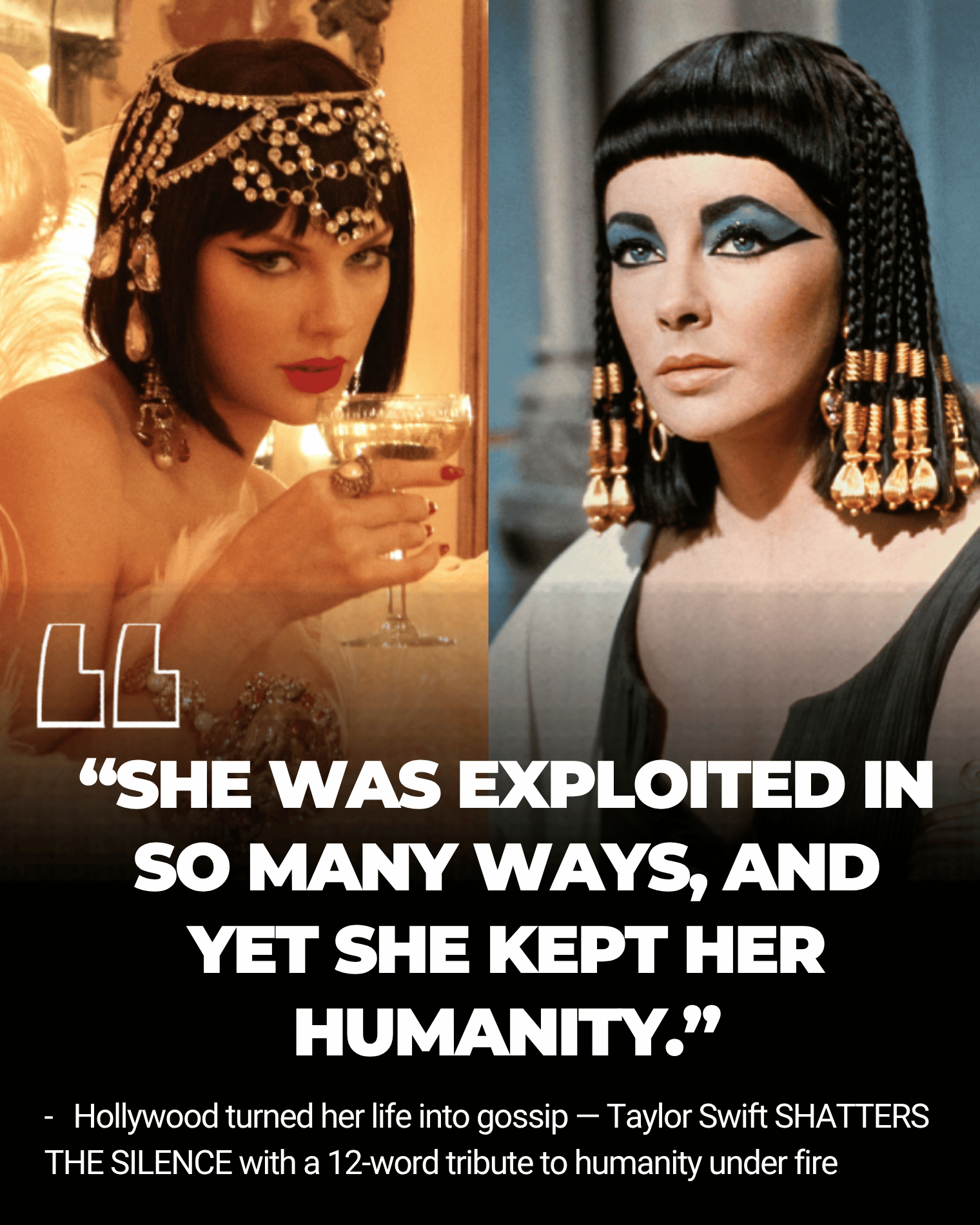
“She was exploited in so many ways, and yet she kept her humanity,” Swift said, delivering a line that cuts through decades of headlines with startling tenderness.
That is the heartbeat behind Elizabeth Taylor, a tribute that sees Swift examining fame through the life of the former National Velvet child star.
Elizabeth grew from a young performer into a two-time Academy Award winner, but the spotlight rarely allowed her success to exist without turning her private life into spectacle.
Every romance, every health struggle, every headline-making appearance seemed to become material for a machine that profited from keeping her exposed.
Swift’s perspective refuses to treat that history as glamorous gossip, and that distinction gives the tribute its emotional weight.
She is not chasing Elizabeth Taylor’s controversy, nor presenting the icon’s public pain as a stylish accessory for modern pop culture.
She is looking at a woman who endured extraordinary judgment while still holding onto compassion, loyalty, humor, and a deeply human sense of self.
That is where the connection becomes impossible to miss, because Swift knows what it means for strangers to turn a woman’s life into a running public narrative.
The singer has spent years watching private moments become global debates, with every relationship, lyric, choice, and expression pulled apart under a massive spotlight.
Yet the Elizabeth Taylor reference does not feel like a complaint or a comparison designed to inflate Swift’s own celebrity mythology.
It lands as respect from one woman living inside the machinery of fame to another who survived it during an even more unforgiving Hollywood era.
Elizabeth Taylor became a legend because of her talent and magnetism, but Swift’s tribute insists that her real victory was more personal than any trophy.
She remained a person beneath the headlines, even when the entertainment industry repeatedly tried to reduce her to a character in its most profitable drama.
That is why Swift’s 12-word statement hits with such force: it shifts the story away from scandal and back toward dignity.
For all the noise around Elizabeth Taylor’s name, Swift appears determined to remember the woman who was still there when the cameras stopped flashing.
And in a culture that keeps demanding celebrities become content instead of people, that kind of tribute may be the loudest statement of all.