
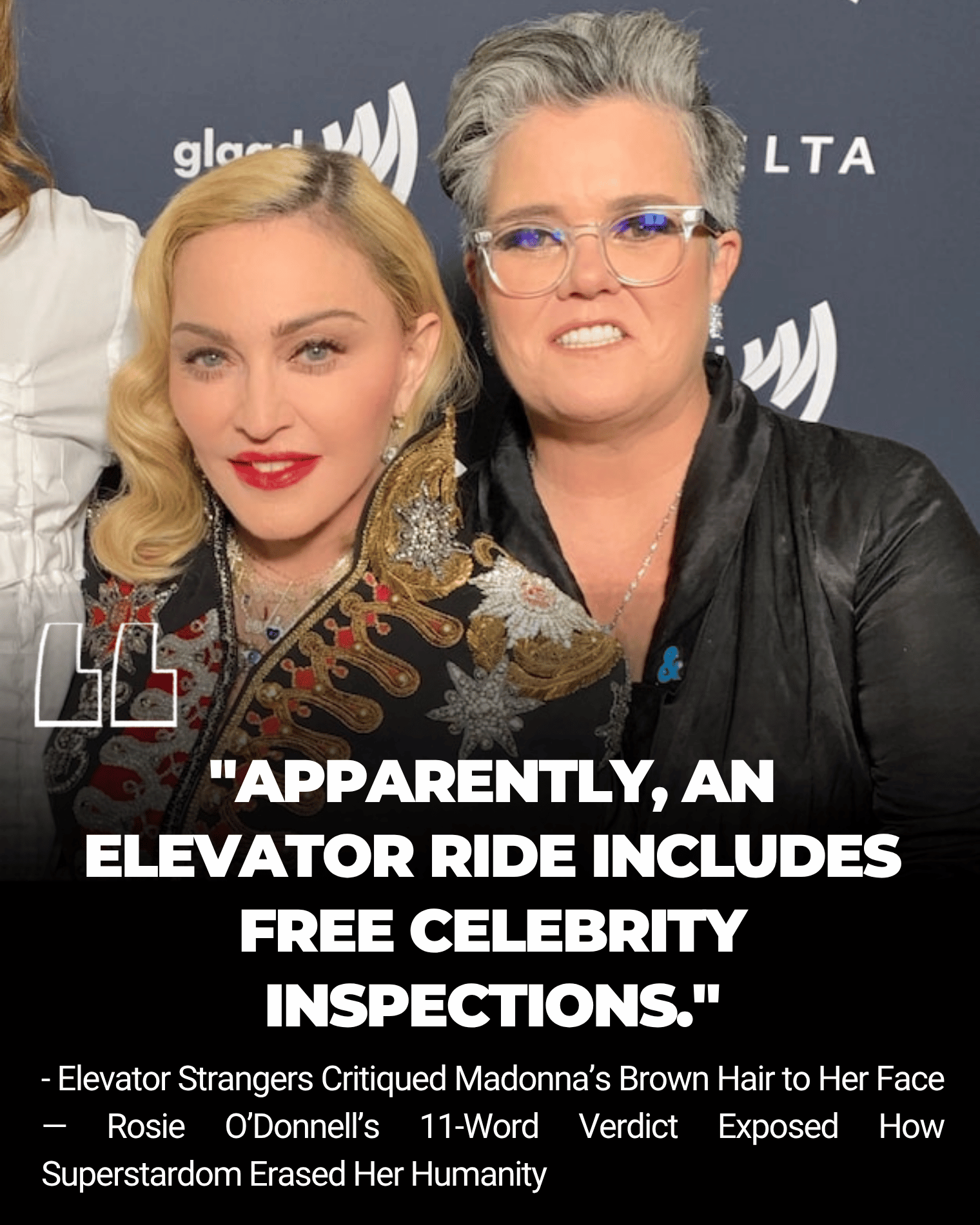
Elevator Strangers Critiqued Madonna’s Brown Hair to Her Face — Rosie O’Donnell’s 11-Word Verdict Exposed How Superstardom Erased Her Humanity
Rosie O’Donnell thought she understood fame before working beside Madonna, but one deeply uncomfortable elevator encounter completely changed how she viewed superstardom. While filming the 1992 baseball comedy A League of Their Own, O’Donnell witnessed strangers treat her costar with an astonishing lack of basic respect.
Speaking on David Duchovny’s Fail Better podcast, O’Donnell recalled standing in an elevator with Madonna when people began openly discussing the singer’s appearance. Instead of whispering after she left, they criticized Madonna’s newly brown hair directly in front of her, apparently unconcerned that she could hear everything.
The moment was not simply awkward celebrity gossip; it revealed how completely the public believed Madonna belonged to them. Her extraordinary fame had erased the normal social boundaries that usually prevent strangers from insulting someone standing only inches away.
O’Donnell remembered the elevator passengers questioning why Madonna had changed her famous blond look for the movie role. Their comments carried the strange entitlement of customers reviewing a product, rather than human beings speaking about another person with feelings.
For O’Donnell, the encounter became a chilling lesson about what happens when fame grows larger than the individual living inside it. “She had lost her humanity in the eyes of the public,” O’Donnell said, delivering an 11-word verdict that exposed the emotional cost behind Madonna’s global image.
The superstar was no longer being treated as a woman making an artistic choice for a character. She had become a public possession whose hair, body, relationships and decisions were considered open territory for judgment from anyone who recognized her.
That realization reportedly stayed with O’Donnell long after filming ended, functioning as a cautionary tale about the darkest side of celebrity culture. Fame could provide wealth, influence and adoration, but it could also remove privacy and encourage people to abandon ordinary kindness.
Madonna had joined A League of Their Own as Mae Mordabito, trading her familiar blond image for brown hair while entering an ensemble led by Geena Davis and Tom Hanks. O’Donnell played Doris Murphy, and their lively screen chemistry quickly became one of the film’s most memorable relationships.
Behind the cameras, however, their connection developed into something far more enduring than a successful Hollywood pairing. The women formed a friendship that survived decades of career changes, tabloid storms and the relentless scrutiny surrounding Madonna’s personal life.
O’Donnell’s story now gives that friendship a more emotional dimension, showing that she did not merely witness Madonna’s enormous celebrity power. She also saw the vulnerability of a person forced to absorb strangers’ opinions without receiving the basic protection usually granted to everyone else.
More than three decades after their baseball movie brought them together, the elevator memory remains painfully relevant. It captures the brutal contradiction of superstardom: millions may adore the celebrity, while forgetting that the person beneath the famous face is still human.