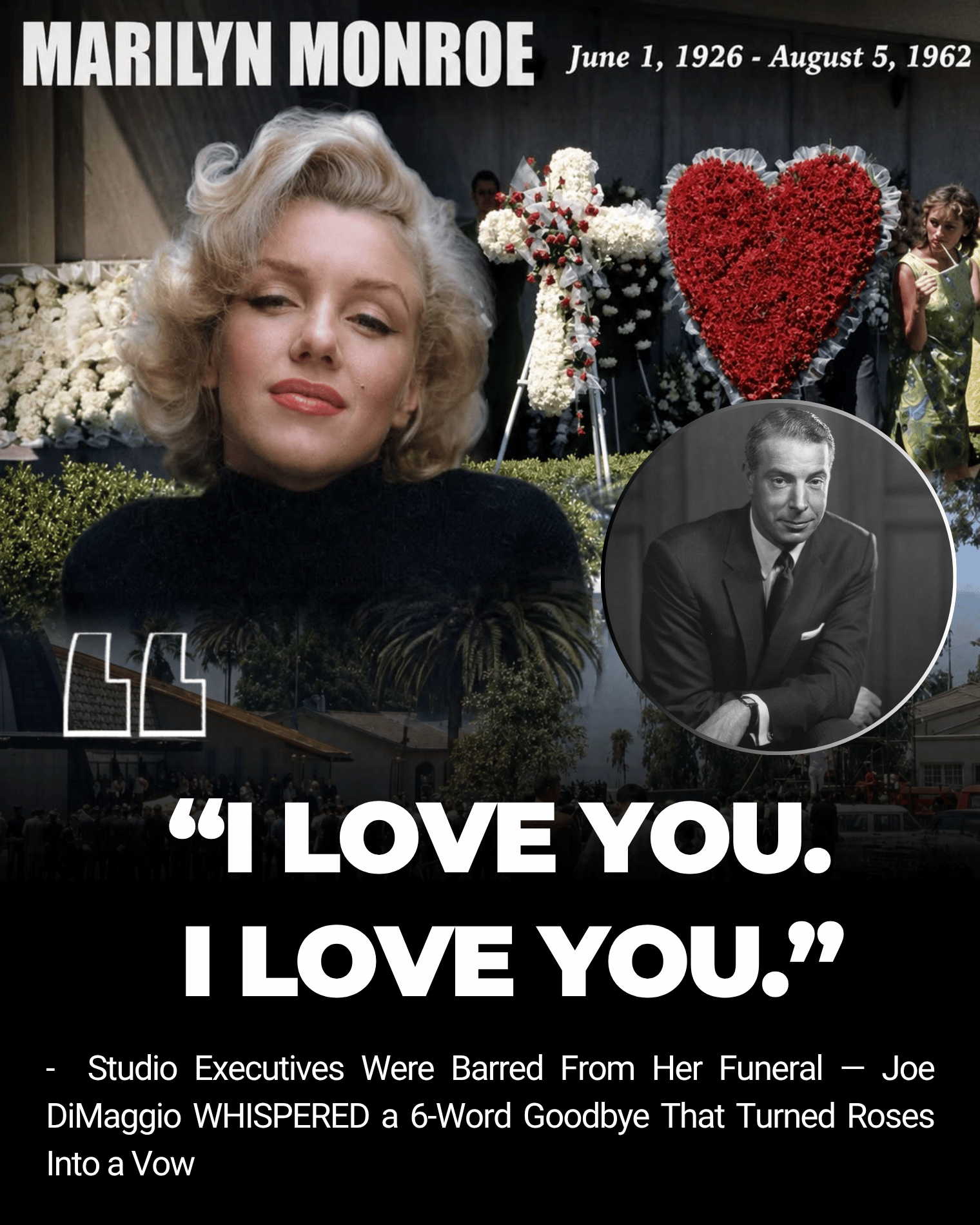
When Marilyn Monroe died in August 1962, the world expected cameras, publicity, and powerful industry figures crowding around the woman they had helped turn into an icon.
But Joe DiMaggio, her former husband and one of the few men still fiercely protective of her, reportedly made sure Monroe’s funeral stayed private, restrained, and painfully personal.
The public had watched Marilyn become a phenomenon through films like The Seven Year Itch, where every smile, dress, and photograph seemed designed to be consumed.
Yet behind the glamour was a woman who had spent years under relentless scrutiny, surrounded by executives, handlers, reporters, and strangers eager to claim a piece of her.
At Westwood Village Memorial Park in Los Angeles, DiMaggio reportedly shut out much of that machinery, refusing to let the funeral become another Hollywood production.
PBS has recounted that studio representatives tried to attend, only for DiMaggio to blame the industry’s treatment of Monroe for the tragedy surrounding her final years.
His anger was not polished for press cameras, and it was not shaped like a studio statement designed to protect reputations after the damage was done.
It was grief speaking through a man who had once been part of Monroe’s wildly public life, then watched her become increasingly isolated beneath impossible expectations.
The former New York Yankees legend had divorced Monroe years earlier, but their bond remained complicated, protective, and far more enduring than outsiders often understood.
Then came the moment that still hangs over the funeral like a whisper nobody could fully erase: DiMaggio leaned toward her casket and said, “I love you. I love you.”
Six words. No grand speech. No flashing bulbs. No rehearsed tribute built for headlines, only a private farewell from a man who seemed determined to give her dignity.
That goodbye later gained even greater meaning because DiMaggio reportedly arranged for roses to be delivered to Monroe’s grave for decades after her death.
The flowers were not just decoration placed beside a legend; they became a quiet ritual, a repeated promise that the woman behind Marilyn Monroe had not been forgotten.
Hollywood had made her face unforgettable, but DiMaggio’s devotion suggested something far sadder: that fame had preserved the image while leaving the person dangerously exposed.
For years, Monroe’s death has invited speculation, mythmaking, and endless cultural fascination, but the funeral offered a different kind of story beneath the spectacle.
It was the story of a man closing the door on the people he believed had treated her like a product, then offering love without asking the world to watch.
And while Marilyn Monroe remains one of cinema’s most photographed figures, Joe DiMaggio’s whispered farewell remains powerful precisely because it was never meant for an audience.